


Introduction
The modern lifestyle has shifted dramatically. With busy schedules, remote work, and the growing importance of health, more people are turning to at-home fitness as a sustainable way to stay active. A daily fitness routine at home eliminates the barriers of gym memberships, travel time, or crowded spaces. It offers flexibility, cost-effectiveness, and the comfort of exercising in your own space.
But here’s the challenge: while working out at home sounds convenient, many struggle to design a proper daily routine that is balanced, effective, and consistent. Without structure, workouts often lose impact, and motivation drops. That’s why creating a simple, adaptable, and well-rounded routine is key.
In this article, we’ll explore how to build a daily fitness routine at home that covers all aspects of health: strength, endurance, flexibility, and recovery. You’ll discover why each element matters, how to organize it, and how these daily habits connect to overall wellness. Whether you’re a beginner or someone restarting fitness, this guide will help you transform your living room into your personal fitness hub.
Why a Daily Fitness Routine at Home Matters
Consistency is the backbone of any fitness journey. When exercise becomes part of your daily life, you build discipline and momentum. A daily home routine helps in:
- Saving time: No commute or waiting for equipment.
- Cost-effectiveness: Bodyweight exercises require little or no equipment.
- Flexibility: You can work out at any time that suits your schedule.
- Privacy and comfort: Perfect for beginners who feel shy about gyms.
- Sustainability: Easier to stick with long-term since it fits into daily life.
Most importantly, fitness at home proves that good health doesn’t require expensive memberships or fancy machines — just consistency and the right structure.
More Alternative Article for you!
Summarize How The Components Of Health Are Related To Wellness
Healthy Lifestyle Habits: A Complete Guide to Better Living
Health and Wellness Jobs: Best Career Options 2025
3 Things to Do as an Advocate for Health and Wellness
Key Components of a Daily Fitness Routine at Home
A proper daily fitness routine should include five essential elements: warm-up, cardio, strength training, flexibility, and cool down. Each plays a unique role in building overall fitness and preventing injuries.

Warm-Up: Preparing the Body
Every workout should begin with a warm-up to prepare muscles, joints, and the cardiovascular system. Skipping warm-ups can lead to injuries and poor performance.
Example warm-up routine (5–10 minutes):
- Marching in place or jogging lightly
- Arm circles and shoulder rolls
- Dynamic stretches like leg swings or lunges with twists
A warm-up increases blood flow, loosens stiff muscles, and mentally transitions you into workout mode.

Cardio: Building Endurance
Cardio exercises raise your heart rate, improve stamina, and burn calories. They strengthen the heart and lungs, reducing the risk of cardiovascular diseases.
Simple cardio exercises at home:
- Jumping jacks (3 sets of 30 seconds)
- High knees (3 sets of 20–30 reps)
- Skipping rope (5 minutes)
- Burpees (start with 5–10 reps)
Doing at least 20 minutes of cardio daily improves endurance, supports weight management, and boosts energy levels throughout the day.

Strength Training: Building Muscles and Bones
Strength training is not just for bodybuilders; it’s essential for everyone. Strong muscles and bones prevent injuries, support metabolism, and improve posture.
Bodyweight strength training exercises:
- Push-ups (3 sets of 10–15)
- Squats (3 sets of 15–20)
- Planks (hold 30–60 seconds)
- Glute bridges (3 sets of 15)
- Lunges (3 sets of 10 each leg)
You can also use simple home equipment like resistance bands or water bottles as weights. Aim for 20–30 minutes of strength training at least 3–4 times per week.

Flexibility and Mobility: Staying Agile
Flexibility exercises improve range of motion, reduce stiffness, and prevent injuries. Mobility is especially important for people who sit long hours.
Stretching and mobility exercises:
- Cat-cow stretch for the spine
- Forward fold stretch for hamstrings
- Shoulder stretches
- Hip openers like butterfly pose
- Yoga poses (child’s pose, cobra, downward dog)
Spending 10 minutes daily on stretching or yoga enhances circulation, reduces stress, and keeps joints healthy.
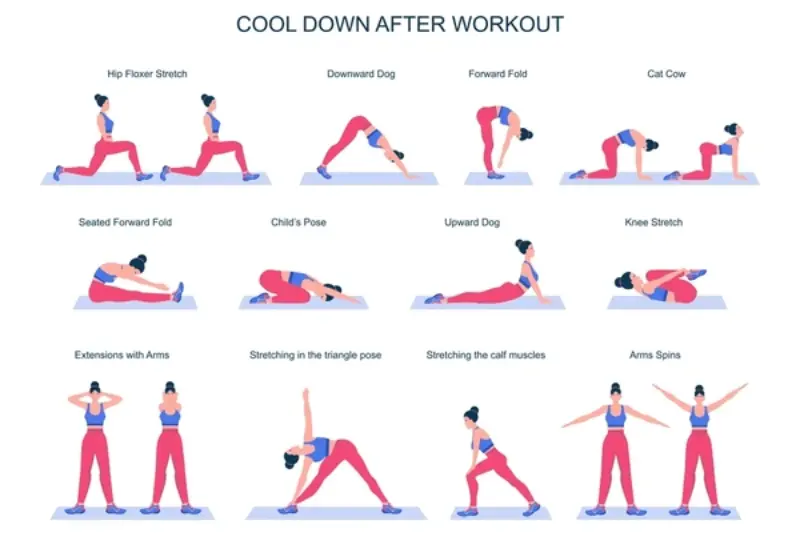
Cool Down: Recovery and Relaxation
Ending workouts with a cool down allows the body to transition safely back to rest mode. It reduces muscle soreness and helps recovery.
Cool down examples:
- Gentle walking in place for 2–3 minutes
- Deep breathing exercises
- Static stretches like hamstring or quad holds
A 5–10 minute cool down is essential to complete the fitness cycle.
More Alternative Article for you!
Beauty of Joseon Sunscreen Review: The K-Beauty Favorite
Anti-Aging Skincare Routine That Really Works in 2025
Grooming Tips for Men and Women: Look Sharp Daily
Kay Beauty Foundation: A Complete Guide
Example Daily Fitness Routine at Home
Here’s a 30–40 minute daily routine that combines all elements:
- Warm-Up (5 minutes)
- Jog in place, dynamic stretches
- Cardio (10 minutes)
- Jumping jacks, high knees, or skipping rope
- Strength (15 minutes)
- Push-ups, squats, lunges, planks, glute bridges
- Flexibility (5–7 minutes)
- Yoga poses, hamstring stretches, shoulder rolls
- Cool Down (5 minutes)
- Light walking, deep breathing, static stretches
This routine can be modified based on your fitness level. Beginners may start with shorter sessions, while advanced individuals can add intensity or resistance.
Benefits of a Daily Fitness Routine at Home
Sticking to a consistent routine offers a wide range of benefits:
- Physical health: Improves strength, flexibility, stamina, and immunity.
- Mental health: Reduces stress, anxiety, and boosts mood.
- Productivity: Increases focus and energy for daily tasks.
- Long-term wellness: Reduces risk of chronic diseases.
- Confidence: Enhances body image and self-esteem.
The best part? You control the environment — no crowded gyms, no distractions, and full flexibility to design workouts that suit your goals.
Common Mistakes to Avoid
Even at home, some mistakes can derail progress:
- Skipping warm-ups or cool downs.
- Overtraining without giving muscles rest.
- Poor form, which can lead to injuries.
- Lack of variety, making workouts boring.
- Inconsistent schedules.
Avoiding these mistakes ensures your fitness journey is safe, effective, and enjoyable.
How Home Fitness Connects to Overall Wellness
A daily fitness routine at home is not just about physical strength — it’s deeply tied to overall wellness. Exercise improves sleep quality, boosts mental health, and fosters discipline. It also supports other healthy habits like eating better and managing stress.
By integrating home fitness into your lifestyle, you create a holistic foundation for wellness, proving that staying fit is about more than just muscles — it’s about balance, resilience, and vitality.
FAQs on Daily Fitness Routine at Home
Can I get fit with just a home routine?
Yes. With consistency and structured workouts, home routines can deliver excellent results in strength, stamina, and flexibility.
How long should a daily fitness routine at home be?
A balanced routine should last 30–40 minutes, covering warm-up, workout, and cool down.
Do I need equipment for a home workout?
Not necessarily. Bodyweight exercises are effective, but resistance bands or light weights can add variety.
How do I stay motivated to work out at home?
Set a fixed schedule, track progress, use workout apps, and reward yourself for consistency.
Can beginners follow a daily fitness routine at home?
Absolutely. Start with low-intensity exercises, shorter sessions, and gradually increase duration and intensity.
How often should I rest?
Even with daily workouts, alternate between intense and light sessions. Include at least one rest or recovery day weekly.
What time is best for a home workout?
Anytime works — mornings boost energy, evenings reduce stress. Choose a time you can stick to consistently.
Can home workouts replace the gym?
Yes, especially for general fitness. Gyms may offer more equipment, but home routines provide flexibility and sustainability.
Do I need a large space for a home routine?
Not at all. Most exercises require minimal space — a living room or bedroom corner is enough.
How does home fitness improve mental health?
Exercise releases endorphins, reduces stress hormones, and improves sleep, all of which support mental wellness.
Conclusion
Building a daily fitness routine at home is one of the most practical ways to take control of your health. With the right mix of warm-up, cardio, strength, flexibility, and recovery, you can achieve a well-rounded fitness program without stepping outside.
Consistency is key. Even 30 minutes a day can transform your energy, health, and confidence over time. Start small, stay committed, and remember: the best gym you’ll ever need is your own body and determination.
More Alternative Article for you!
Work Life Balance Strategies: Achieve Success & Wellness
Simple Self-Care Tips Daily: Healthier Lifestyle Guide
